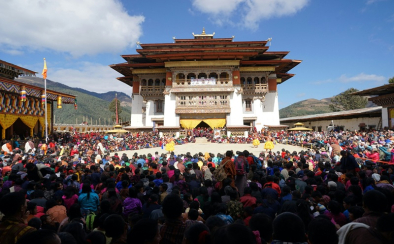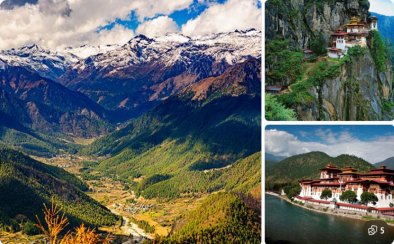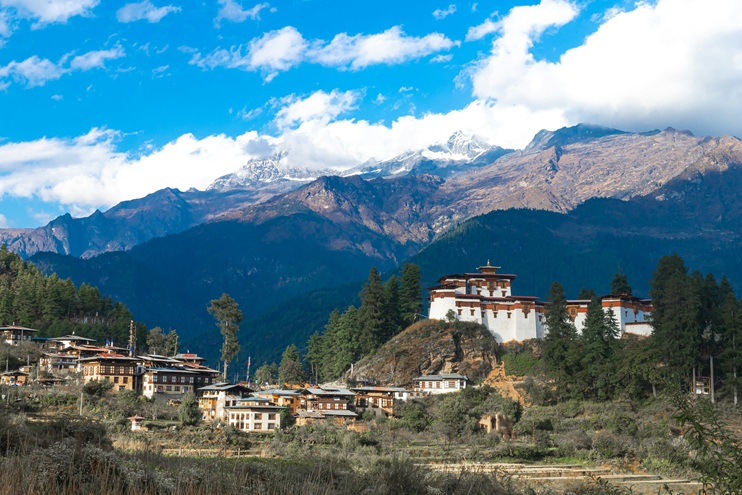
Bhutan tourism focuses on high-value, low-volume travel, preserving its unique Buddhist culture, pristine environment (being carbon negative), and Gross National Happiness (GNH) philosophy, requiring tourists to pay a Sustainable Development Fee (SDF) and book through licensed operators for guided tours, offering experiences from spiritual treks to vibrant festivals and architectural wonders like Tiger's Nest Monastery.
Meet & greet on arrival by our representative at Bagdogra and drive to the Indo – Bhutan Border (Jaigaon-Phuentsholing), on the way to the beautiful scenic Tea garden Estates. On arrival check in to the hotel and evening is free for the local market around Phuentsholing. Overnight stay at Phuentsholing.
-
-

- Breakfast
Included
-
-
- Dinner
Included
Hotel Central / Hotel Dewaling/ similar

After breakfast processing immigration formalities, drive to Thimphu –The capital of Bhutan via Gedu, which is located about 9000 ft. above the sea and view of Chukka Dam. And stopover for photo session at Wangkha Waterfalls on arrival at Thimphu check in hotel and evening free for local market .Overnight hotel stay in Thimphu hotel.
-
-
- Breakfast
Included
-
-
- Dinner
Included
After breakfast, drive up to Dochu-la pass (3,088m/ 10,130 ft) stopping briefly here to take in the view and admire the chorten, mani wall, and prayer flags which decorate the highest point on the road. If skies are clear, the following peaks can be seen from this pass (left to right): Masagang (7,158m), Tsendagang (6,960m), Terigang (7,060m ), Jejegangphugang (7,158 m ), Kangphugang (7,170 m ), Zongphugang (7, 060 m ), a table mountain that dominates the isolated region of Lunana - finally Gangkar puensum, the highest peak in Bhutan at 7,497m.
After visit to Punakha Dzong, Built strategically at the junction of Pho Chhu and Mo Chhu rivers in 1637 by Shabdrung Ngawang Namgyal to serve as the religious and administrative centre of the region, Punakha Dzong has played an important role in Bhutan's history. Damaged by four catastrophic fires and an earthquake, the Dzong has been fully restored by the present King.
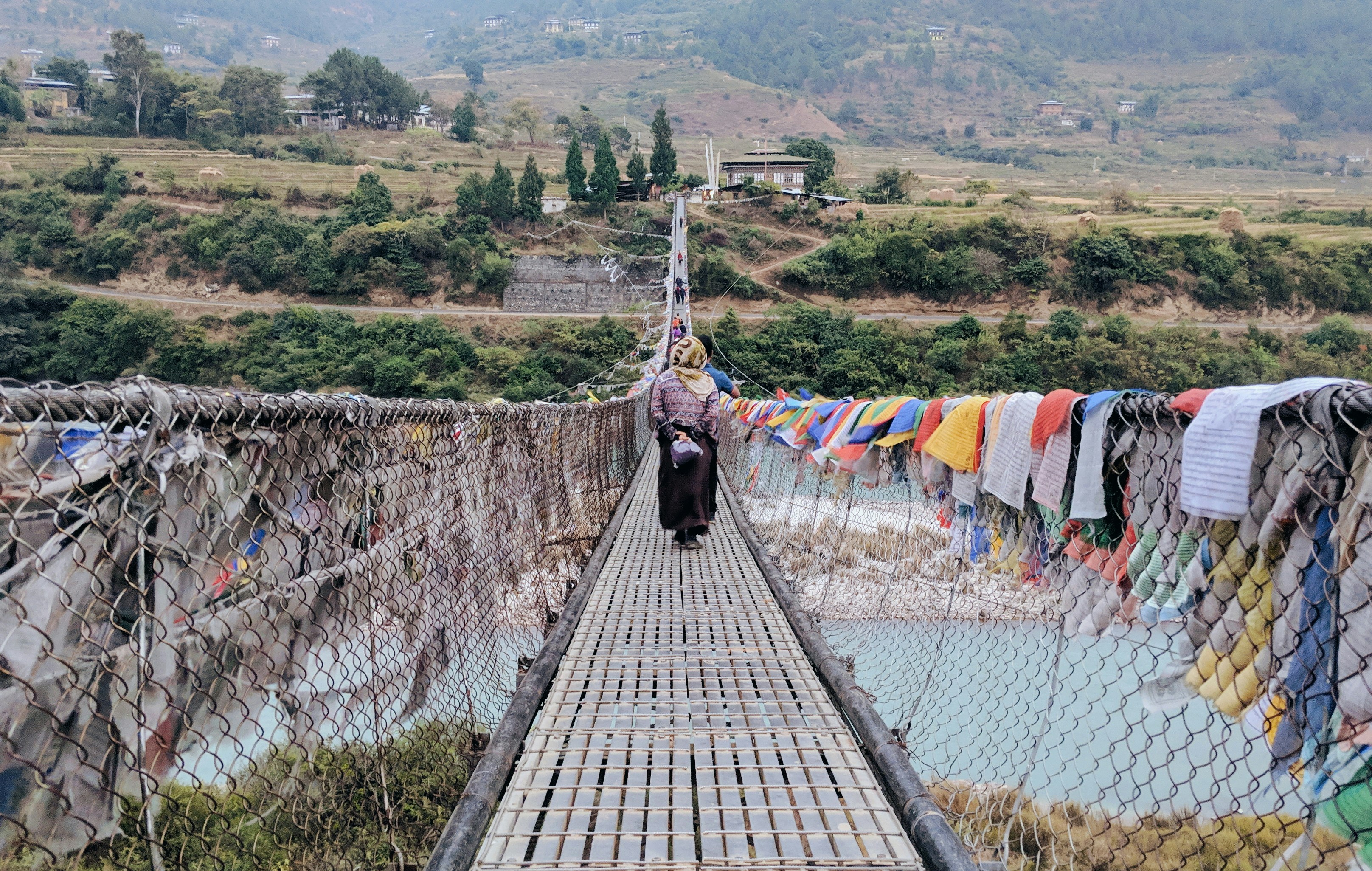
Punakha Suspension Bridge: One of the longest suspension bridges in Bhutan, spanning 350m and perched high above the very swift river of Po Chhu. Draped with prayer flags, the bridge connects the town of Punakha and the Punakha Dzong, mainly used by locals from the other side of the town as a shortcut to Punakha Dzong. Overnight stay in Thimphu
-
-
- Breakfast
Included
-
-
- Dinner
Included
The Simtokha Dzong, built in 1629 by Shabdrung Ngawang Namgyal, functions as a monastic and administrative centre and is the oldest Dzong which has survived in its original form; Namgyal brought into vogue, for the first time in Bhutan, this concept of the "Dzong" as castle monastery. An attack on the Dzong was made by five disgruntled lamas in collaboration with an invading army of Tibetans who were against the Buddhist practices of the Dzong under the control of Zhabdrung. They were defeated and Palden Lama who was the leader of the invaders died in the battle. Another attack on the Dzong in 1630 by the Tibetans was successful for a while till part of the Dzong caught fire and with the roof collapsing all the invading forces were killed.
National Library, which holds a vast collection of ancient Buddhist texts and manuscripts, some dating back several hundred years, as well as modern academic books mainly on Himalayan culture and religion; Institute for Zorig Chusum (commonly known as Painting School) where students undertake a six-year course on the 13 traditional arts and crafts of Bhutan;
The Motithang Takin Preserve – For animal lovers, Motithang Takin Preserve is one of the best places to visit in Thimphu. This attractive preserved area was built as a small zoo but later it was converted into an animal preserve centre. Takin -The national animal of Bhutan, lives in the Motithang Takin Preserve in Thimphu National Memorial Chorten: The building of this landmark was envisaged by the third king, His Majesty Jigme Dorji Wangchuck, as a monument to world peace and prosperity. Completed in 1974 after his untimely death, it is both a memorial to the Late King ("the Father of modern Bhutan") and a monument to world peace. The paintings and statues inside the monument provide a deep insight into Buddhist philosophy.
Trashichhoe Dzong view point: This impressive fortress/monastery houses Secretariat building, the throne room of His Majesty, the King and various government offices. It is also the summer residence of Chief Abbot and central monk body.
Handicrafts Emporium: This government-run enterprise displays a wide range of beautifully hand-woven textiles and craft products. It also carries a small collection of books on Bhutan, Buddhism and Himalayan culture.
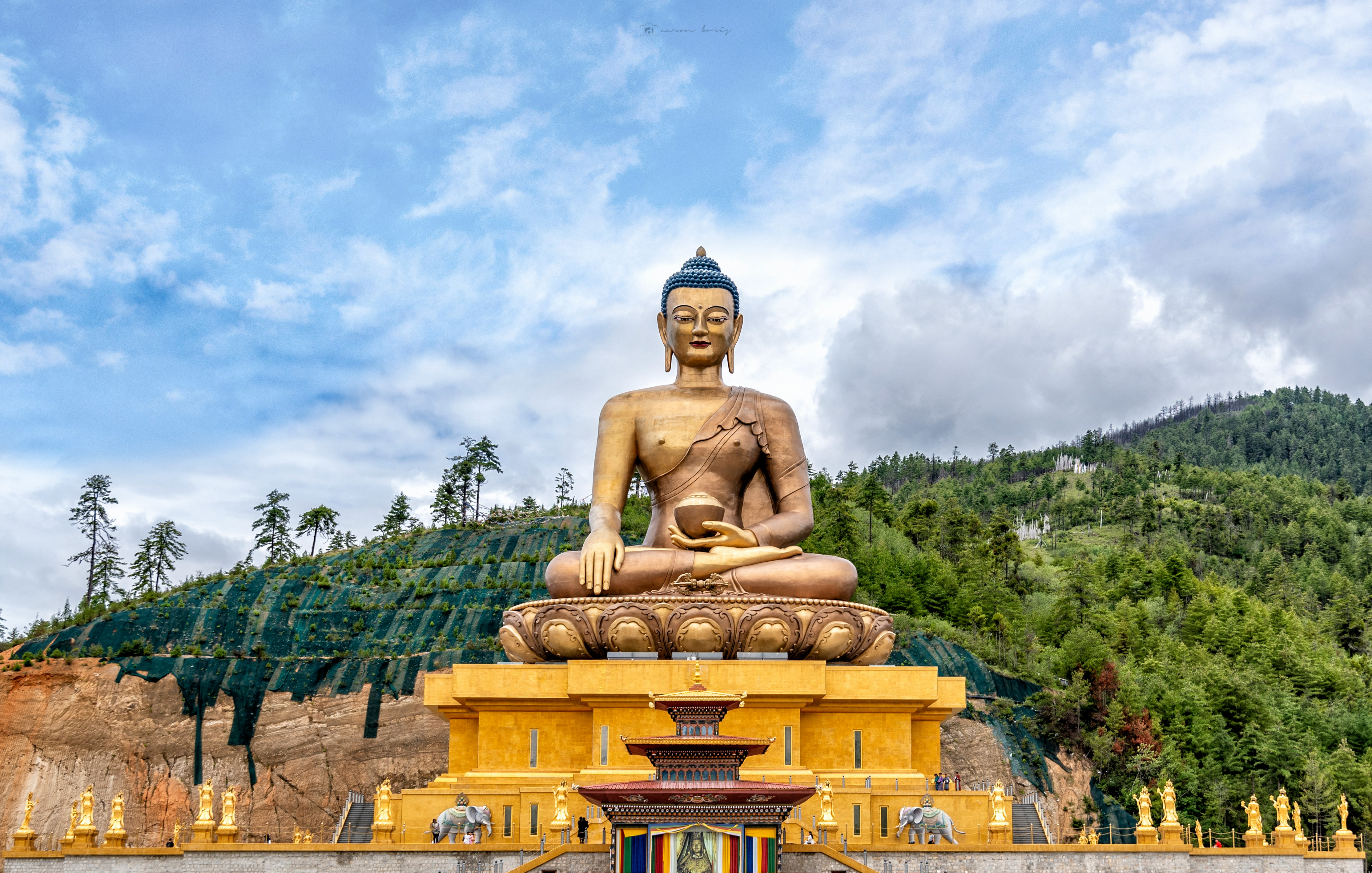
Lord Buddha Statue, The Buddha Dordenma is located amidst the ruins of Phodrang,
the palace of Sherab Wangchuck, the thirteenth desi Druk, overlooking the southern approach to Thimphu, the capital of Bhutan. On completion, it will one of the largest statues in the world, at a heigh of 169 feet (515.5 meters) , accommodating 100,000 8-inch tall and 25,000 12-inch tall gilded Buddha’s respectively in the interior. The statue is surrounded by 943 acres of forest area that comprises the Kuensel Phodrang nature park.
The Clock Tower - Clock Tower Square is an example of a great architectural marvel. It is a tower with four clock faces, which makes it different from any other building or structure in Bhutan. One of the most popular places among visitors, people usually visit here in the evening to enjoy the beautiful paintings and carvings. There are many restaurants and souvenir shops near this tower, making it one of the most visited sites in the town. Hotel night stay in Paro.
-
-
- Breakfast
Included
-
-
- Dinner
Included
Hotel Ratna Vara
After breakfast drive to Chele la (pass) at an elevation 3,988 meters is considered to be one of the highest memorable passes in Bhutan. About an hour's drive along a thickly-forested road, is this Pass-a botanical paradise. The pass provides stunning views of the sacred mountain Jomolhari and Jichu Drake. It is also marked by hundreds of prayer flags fluttering in the wind. Here, visitors can see cascades of wild roses; purple and yellow primulas; and swathes of deep blue iris covering the forest floor. The top of the pass bloom with rhododendrons in a variety of colours-pale pink, deep pink, burnt orange, mauve, white and scarlet.
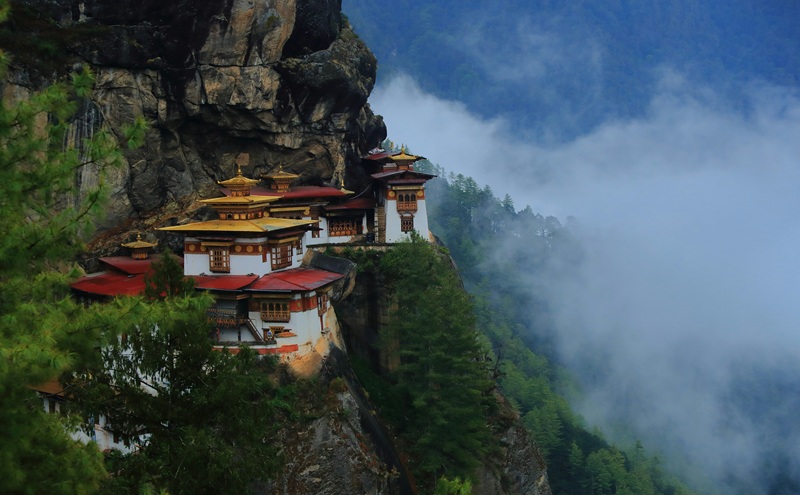
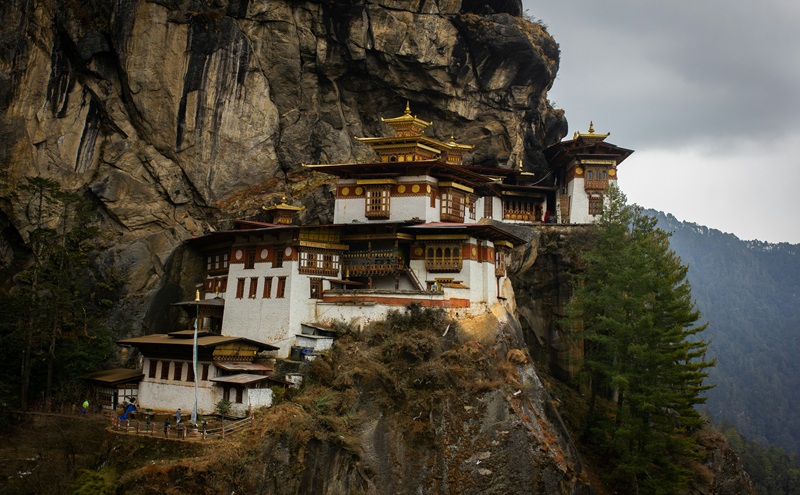
Or Taktsang Monastery This most famous of Bhutan's monasteries is spectacularly perched on the side of a cliff 900 m above the Paro valley floor. Taktsang is a place of pilgrimage which Bhutanese try to visit at least once in a lifetime. It is said that in the 8th century Guru Rinpoche flew on the back of a tigress from eastern Bhutan to this place and meditated in a cave here for 3 months, hence its name, "Tiger's Nest". The site, which has long been recognized as a most sacred place, was visited by Shabdrung Ngawang Namgyal in 1646. The principal Lhakhang of the present monastic complex dates from 1692. The main structure was severely damaged by fire in 1998, but after many years of painstaking renovation work, the complex has now been fully restored to its former. Overnight stay at Paro.
-
-
-
-
- Dinner
Included
-
Hotel Ratna Vara
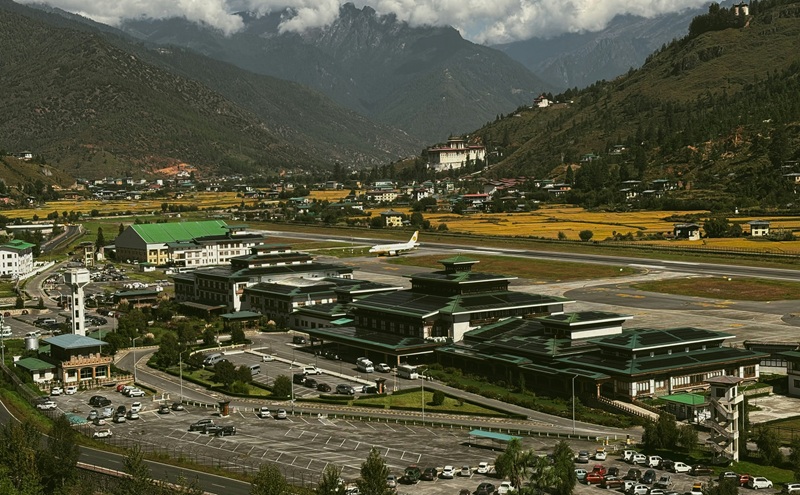
Paro Airport View: This is one of the most stunning airports in the World and also the country’s first and only international airport. With a breath-taking view, this airport became a must-visit place in Paro. Visit Kyichu Lhakhang, one of the oldest and most sacred shrines of the country, built in the 7th century by the Tibetan king, Songtsen Gampo.
Ta Dzong originally built as a Watchtower, which now houses the National Museum. The extensive collection includes antique thangka paintings, textiles, weapons & armour, household objects and a rich assortment of natural and historic artifacts. Then walk down the trail to visit Rinpung Dzong, meaning ("fortress of the heap of jewels"), which has a long and fascinating history. Along the wooden galleries lining the inner courtyard are fine wall paintings illustrating Buddhist lore such as four friends, the old man of long life, the wheel of life, scenes from the life of Milarepa, Mount. Sumeru and other cosmic Mandala. Overnight stay in Phuentsholing.
-
-
- Breakfast
Included
-
-
- Dinner
Included
Hotel Central / Hotel Dewaling/ similar
-
In case client wishes to prepone /postpone his or her travel dates, we request you to kindly reach us 15 days prior to journey date via e-mail/SMS.
-
The customers can prepone /postpone their tour once without any additional charges (if intimated before 15 days of travel date in written). However postponing & preponing second time will attract additional charges.
-
Also note that few service providers (Hoteliers, Transporter etc.) may apply postpone/prepone charges even after meeting above requirement. In such cases postpone/prepone charges will deducted from the advance amount deposited.
-
In all prepone or postpone scenarios, the services and the costing will be subject to availability of Hotel/Volvo and season/off season time.
-
We do not accept any changes in plan within 15 days of travel date. However in rare cases like adverse climatic conditions or strikes, package can be postponed which will be intimated to you beforehand.
-
The validity to utilize your Advance payment in prepone/postpone scenarios is 1 Year from the date of advance payment.
-
The advance payment and the invoice Number allotted to you, are transferable i.e. you can pass on your booking to any of your friends/ relatives. (Please Note: In order to transfer your booking you must meet the above terms and conditions first).
|
NO. OF DAYS |
CHARGES |
|
45 Days prior to departure date |
Deposit amount per person will be non-refundable |
|
44 - 30 Days |
50% of Package Cost |
|
29 - 15 Days |
75% of Package Cost |
|
14 Days or less/No Show |
100% of Package Cost |
|
For Flights booked on behalf of Pax |
No Refund |